
VIDEO: How young clinicians can help build the healthcare system we all want and need
In the latest installment of our video series, “Office Hours with Dr. Saini,” Lown Institute president Vikas Saini gives his take on healthcare affordability topics, one question at a time. This week’s question: What should young clinicians be doing right now to build the healthcare system we all want and need?
“The hard part is in this historical moment, we need clinicians, including young clinicians, to start being comfortable not coloring inside the lines.”
Dr. Vikas Saini
Welcome to “Office Hours with Dr. Saini.” I’m Dr. Vikas Saini, president of the Lown Institute. In this series, I give you my honest take on the American health care system, one question at a time. Today’s question is, what should a young clinician be doing today to build the health care system we all want and need?
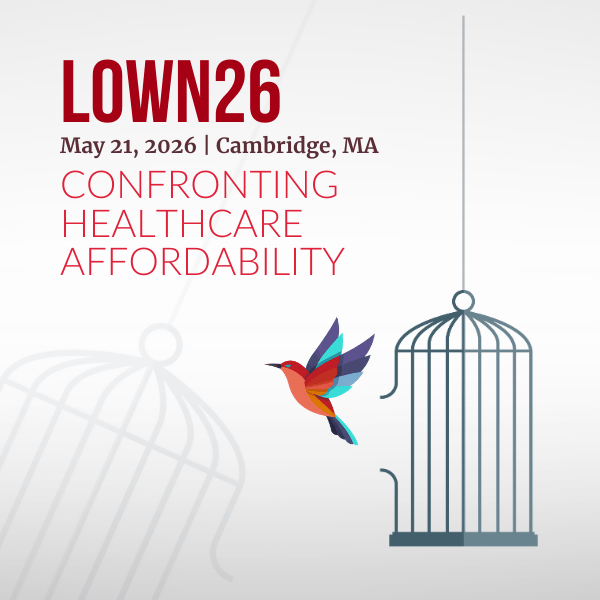
Before I get started, you should know that the Lown Institute is hosting a conference on healthcare affordability in May. Click the link on the screen to register.
Register before prices increase!
The healthcare affordability crisis isn’t a partisan issue. It’s a human one. This one-day conference brings together leaders who recognize that solutions won’t come from staying in our corners.
Q1: What’s one thing to know about the healthcare system that isn’t taught in training?
It’s natural as a young clinician to want to stick to the rules of the road because dire consequences can happen if you stray and you need your elders to guide you. There’s a reason the apprenticeship model is so important because it’s so complex it cannot be imparted easily. The hard part is in this historical moment we need clinicians including young clinicians to start you know being comfortable not coloring inside the lines. We need people to think a bit differently and at least be open to looking at other dimensions because it’s pretty clear the trajectories we are on are not good and if we’re going to pull out of the nose dive then everybody’s going to have to grab that steering wheel and and try to get us out. And so for young people part of what that means is not being afraid to learn about things beyond the core part of medicine.
Q2: What are the traits of clinicians who have impact and make change?
I think the traits of people who have impact and make a change are really persistence. They don’t take no for an answer because they’re trying to solve a problem and that’s the motivator and so they just keep poking until they find the path that opens up something for them. I think that kind of persistence and sense of stick-to-it-iveness is pretty important. It’s like what they say about entrepreneurs. I helped start a company and was pretty young and if we’d actually known what it took, we would never have done it. You need a certain naivete to say: We can do this.
Q3: What should young clinicians refuse to accept as “just the way things are”?
Young clinicians should just refuse to accept the idea that prices are some kind of natural force in the world. I’m thinking about drug prices. I’m thinking about insurance prices, hospital prices, and their own prices. They have real basis in the world. So it’s not just that it’s a fantasy, but it is a negotiated situation. And what that means, it’s amendable to action. In particular, you think about high drug prices and the role of PBMs and there’s no reason we should accept that. And in fact, that’s the kind of movement amongst clinicians that could be transformative.
Q4: How can young clinicians help find the path to real affordability?
We really have an opportunity as clinicians to help find the path to real affordability because a lot of what we do is marginal at best and a lot of what we do is sort of reflex thinking or based on guidelines that themselves are really not well thought out. It does take spunk and it does take real knowledge to be able to forge that path. But there’s no doubt in my mind that if we did that, we could transform how we do health care and make it more affordable.
That means reducing a lot of low value care. That means really doing as much as possible for the patient as little as possible to the patient. It means having a preferential bias in that direction whenever we face a decision of certain amount of clinical uncertainty. It takes time and it takes effort and it would take again a cultural shift. But there’s no doubt that if we could do that, clinicians could be a leading force for solving the healthcare crisis rather than being subjects of other people’s actions.
If anything of what I’m saying resonates with you or interests you, you really don’t want to miss the LOWN26 conference confronting healthcare affordability. It’s May 21st. You can register online. It’ll feature a lot of young clinicians who are leading the way. And that evening, we’ll be giving the Bernard Lown Award for Social Responsibility to a young clinician along with a $25,000 prize.
I hope we see you there.